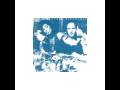
The card of the day (later edition) today is from the 1969 Topps set, card #532, Bird Hill Aces. It features
Tom Phoebus,
Jim Hardin,
Dave McNally and
Mike Cuellar. Conspicuously absent is
Jim Palmer. Of course Palmer spent the 1968 season in the minors re-discovering his stuff. By the time the ’69 season rolled around and this card came out Palmer had joined the quartet and moved into the 4th spot in the rotation. The card was accurate in that McNally and Cuellar were aces, Phoebus wasn’t too shabby either (14-7 in ’69), but
Jim Harden fell off the mark in ’69 going 6-7 in 20 starts after an amazing 18 win campaign in 1968. Harden would hang on with the Orioles as a spot starter in 1970, but would be traded to the Yankees in ’71 and retire soon after. The other 3 plus Palmer would form the greatest pitching dynasty of the late 60’s and early 70’s.
Mike Cuellar would win the Cy Young Award in ’69 and averaged 20 wins a year from 1969-1974 helping the Orioles to 5 playoff appearances and a World Series victory in 1970. Dave McNally topped 20 wins in 4 straight seasons beginning in 1968, but never won the Cy Young-he did league the AL in wins in 1970.
 Tom Phoebus
 was 14-7 in 1969, but was traded to the Padres in 1972, but he did collect a win in relief in the ’70 WS. Jim Palmer, who was left off of the card, would pitch for the Orioles until his retirement in 1984. He topped 20 wins eight times from 1970-1978 and also won Cy Young Awards in 1973, 1975 and 1976. He had already won a World Series with Baltimore in ’66, but he would win again in 1970 and 1983. He would win 268 games for the Orioles and went into the Hall of Fame in 1990. The card was correct in that those 4 young pitchers would lead Baltimore to greatness-they took the American League Flag in ’69, but lost to the Amazing Mets in the World Series. All 4 of them, plus Palmer took home the Pennant in 1970 before the group was broke up. Phoebus and Hardin were relegated to spot starts and some bullpen duty because the Big 3 of
McNally,
Cuellar and
Palmer took care of nearly everything themselves.

Each one of those starters pitched more than 290 innings in 1970 and Cuellar and McNally each won 24 games. Palmer chipped in 20 wins himself. Those three accounted for 54 complete games, 10 shutouts and 68 of the Orioles 108 wins that year. They beat the Reds in the World Series for their only Pennant as a group. The pitching led them there, but Brooks Robinson took home the WS MVP after batting .429 with 2 homers and 6 RBI. With 3 pitchers on the team having outstanding seasons they split Cy Young votes and didn’t win. Minnesota’s Jim Perry (24-12 3.04) took home the award. McNally (24-9 3.22) placed 2nd, Cuellar (24-8 3.48) was 4th and Palmer (20-10 2.71) was behind him in 5th place. That is my take on the card, here is what the writer’s at Topps Baseball said on the back:
 “Four starting pitchers give the Orioles one of the most respected pitching staffs in the league. Tom Phoebus, a 14 game winner in his rookie year, rang up 15 wins in his sophomore campaign in ’68. Don’t forget this righthander also pitched shutouts in his first two appearances in the AL. Jim Hardin was another improved sophomore for Baltimore last year. As a rookie 1967, Jim won 8 games but last season he notched 18 victories. The ace of the staff is southpaw Dave McNally who was the #2 man in the AL in 1968 with 22 victories. Mike Cuellar joined the Orioles last winter via the deal that sent Curt Blefary to the Astros. With Houston last year, the righthander was their top starter with a fine 2.74 ERA.”
That sums it up pretty well. As big a fan of Curt Blefary as I am, the trade of him that brought

Mike Cuellar to the Orioles may have had more influence on their Dynasty than any other move. I really love these group cards, I really love Topps card of the 60’s, I really love going back and seeing how true the card companies predictions were. I really like the pose here, too. The 4 four aces sitting on a park bench showing off their dangerous (except for McNally) right arms. In the case of this card, these 4 (plus Palmer) got the job done in ’69 and ’70, as advertised. Well done Topps! Today will probably be the final day of voting for my
1980 Rookie Cards Contest-Ken Griffey Jr and Ricky Henderson remain in a deadlock, how about a few more
votes before I shut it down? Oh, a couple of endnotes... As I have mentioned before, all of the cards that I post for card of the day are available for trade. I have the notion that I would like to chase the '65 Topps set and I am about 5 per cent of the way there, so any of my cards from the 60's are available for '65 Topps. Also, this card is from the 1969 set which my friend over at
Closet Full of Cardboard is trying to build. Get in touch with
him if you have any '69s you want to get rid of. Also, I use
Baseball Reference for all of my stats and lately I have tried to link the players with their stats page so you have a reference. Okay, that is it. I love this hobby! Troll out.
 Good morning collectors! Time for a quick card of the day post before working another double shift… The exciting thing about today is it is a split double-1st and 3rd shift. The reason is Mrs. Troll is graduating tonight!!! With honors, as you can imagine I am mega-proud! Pictures will probably follow. Anyway, the card of the day comes from the 1969 Topps set, card #545 of Pittsburgh Pirates leftfielder Willie Stargell. I picked this card because Willie had a very off year (for him) in ’68 ('68 was the year of the pitcher), but bounced back huge in ’69 and he was just getting started. Stargell was an All Star 3 times in his 20s, but he really came into his own in his thirties. He was an All Star 4 times, but was in the top-10 in All Star voting 7 times from 30 on up. When he finally won the MVP Award he was 39 years old and he didn’t just win the MVP, he won the NLCS MVP, the World Series MVP, the Major League Player of the Year, the Babe Ruth Award and he and the Pirates won the World Championship. That would also be his final full season in the big leagues. I am getting ahead of myself though… In ’69 Stargell was 29 and he had bounced back from a year (1968) where he hit just .237 with 67 RBI. In ’69 he raised his batting average 70 points (.307-8th in NL), raised his slugging percentage 115 points to .556 (4th in NL) and drove in 24 more runs. The back of the card mentions that on June 24, 1965 Willie belted 3 homers in one game. It is unusual that it only mentions that one time because he also did it in 1968-hitting 3 homers on 5/22/68. Of course he did it twice more after that, too. The back of the card also mentions: Pittsburgh’s slugging star set the club record for homeruns by a left-handed batter when he clouted 33 round trippers in 1966. Last year Willie topped the Bucs with 24 homers.”
  He would top the Bucs in homers many more times and he topped the NL in homeruns twice (’71,’73), too. He also raised the club record from 33 up to 48 homers in 1971. Willie Stargell was the greatest slugger in Pirates history-he owns the club record with 475 career longballs (28th All-Time) and he did it with grace, class and without steroids. Maybe the most impressive thing is that he spent 24 years with the Pirates organization, never playing for another team. From the time he signed as an 18-year-old in 1958 till his final game in 1982, he was a Pirate. As a fan I only knew of Willie “Pops” Stargell, the elder, veteran leader of the “We Are Family” teams-I like looking back at this youthful Stargell, 7 years into his career, optimistic, but with no idea he would be one of the greatest to ever play the game. I love this hobby! Troll out.


 Check this out: He was 7-2 in 9 starts. 8 complete games and 2 shutouts. He had a 1.89 ERA with only 17 walks to 92 strikeouts. That’s right, 92 freaking Ks in the World Series! They came over 81 innings giving Gibson an average of 9 innings per start in the WS. He finished every game he started except for 1 where he left after 8 innings, but 1 complete game went 10 innings. He pitched in 3 World Series for the Cards during the sixties, winning the first 2 and losing the final against the Detroit Tigers in 1969. He was the World Series MVP in the two that the Cards won in 1964 and 1968. At the plate he had 28 at-bats, getting 4 hits for a .143 batting average. Not too great, but 2 of those hits left the park. Not many players have 2 career World Series homers, especially a pitcher who averages 9 innings a start…
 Bench won the NL ROY and Jerry Koosman took second place as the only other player to receive a vote, Bahnsen took the honor in the AL and Del Unser was the only other player mentioned.
 Marshall only started 45 games that year. The rest of his action was as a pinch hitter. Being a left handed bat, he was valuable off the bench for his skipper, Herm Franks. The back of the card touts: “A promising young outfielder, Dave was selected to the 1968 Topps Rookie All Star team. As a pinch hitter last year, he was 7-23 with 5 RBI’s!”
 Call me crazy, but batting .304 is nice as a pinch hitter, but is it nice enough to be on the All Rookie team? For the season Marshall batted .264 with 1 homerun and 16 RBI. He stole 2 bases and scored 17 times. Those numbers just don’t strike me as All Rookie Team material. What am I missing here?